How to Get Rid of Hormonal Acne Naturally: A Science Guide

You can usually tell hormonal acne by where it shows up and when. Jawline, chin, along the sides of the neck. Deep, sore, slow. It arrives about a week before your period, sticks around, and doesn't respond to the spot treatment that works fine on everything else.
If that's your pattern, here's the thing nobody tells you early enough: this is not a teenage problem you failed to outgrow. In a study of more than 1,000 adults published in the Journal of the American Academy of Dermatology, researchers found acne persisting well past the twenties, and affecting women more than men at every adult age bracket (Collier et al., 2008).
So let's talk about what actually moves the needle, starting with why the jawline pattern happens at all.
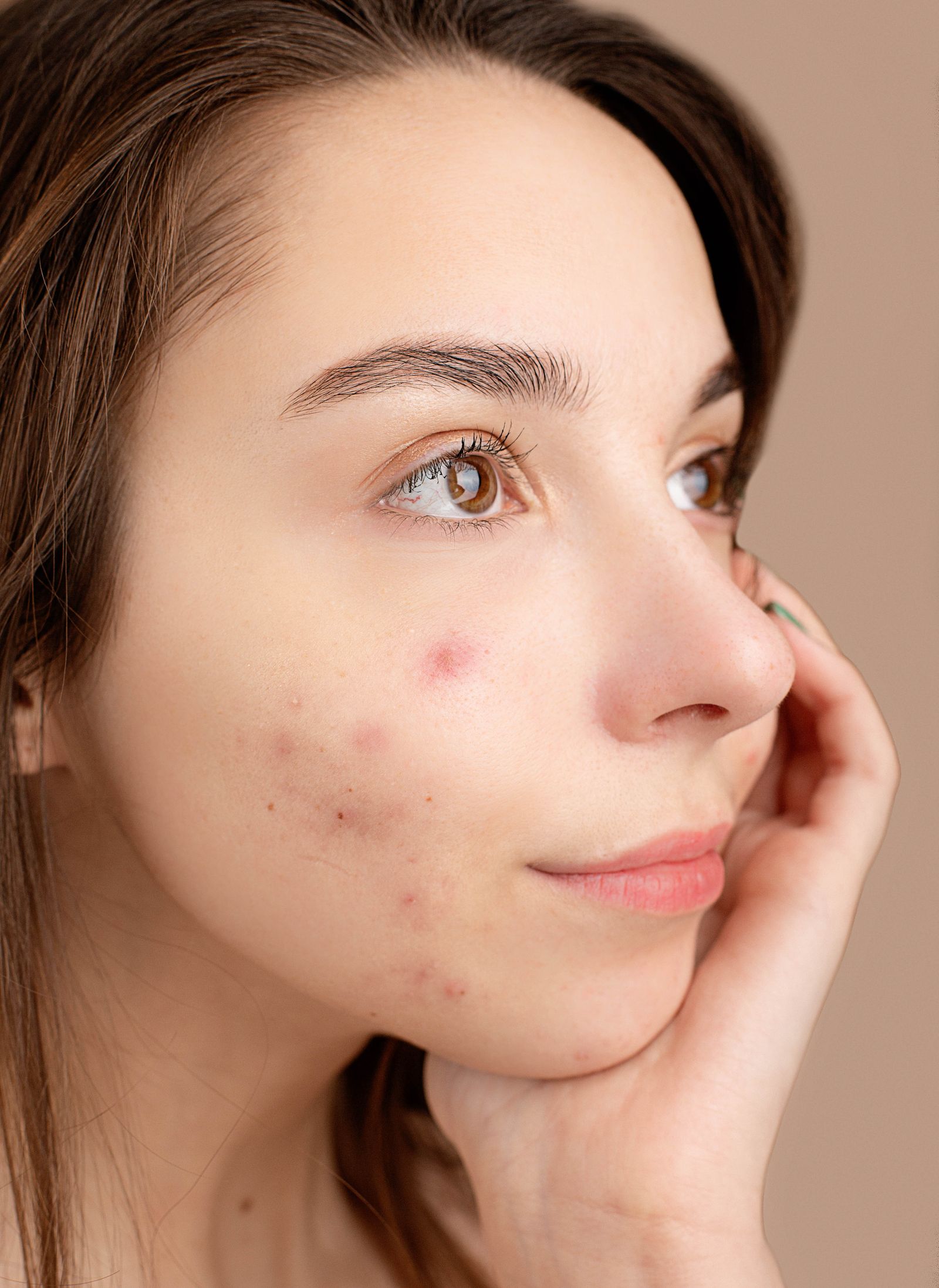
Why the jawline
Your sebaceous glands are hormone-responsive tissue. Christos Zouboulis and colleagues have described the sebaceous gland as functioning like an endocrine organ, converting hormones locally and producing inflammatory signals on site (Dermato-Endocrinology, 2011). A follow-up review in Experimental Dermatology framed acne endocrinology and immunology as two halves of the same process rather than separate stories (Zouboulis, 2020).
The lower third of the face carries a high density of these glands and appears especially sensitive to androgen signalling. When androgen activity rises relative to estrogen, which happens in the luteal phase, those glands produce more sebum. Thicker sebum, blocked follicle, inflammation, and a cyst that hurts before you can see it.
Which is why a benzoyl peroxide dot does nothing. It's addressing the last step of a process that started two weeks earlier and three layers down.
Start with blood sugar, not skincare
This is the highest-leverage change most people haven't made, and it's free.
Insulin drives IGF-1, and IGF-1 increases androgen activity and sebum production. That's the chain. In a randomized controlled trial published in the American Journal of Clinical Nutrition, young men followed either a low-glycemic-load diet or a control diet for 12 weeks. The low-glycemic-load group showed greater reductions in total lesion counts along with improvements in insulin sensitivity (Smith et al., 2007).
A separate randomized controlled trial in Korean patients, published in Acta Dermato-Venereologica, found clinical and histological improvement on a low glycaemic load diet, including reduced sebaceous gland size and lower inflammation markers in biopsied skin (Kwon et al., 2012). Skin biopsies. That's a level of evidence most "acne diet" advice never comes close to.
You don't need to eliminate carbohydrates. Pair them with protein and fat, eat them after a meal rather than alone, and stop drinking your sugar. That's most of the benefit.
Look honestly at dairy
Dairy is the one worth testing on yourself. A systematic review and meta-analysis in Nutrients covering 78,529 children, adolescents, and young adults found an association between dairy intake and acne, with skim milk showing up more strongly than whole milk in several of the pooled datasets (Juhl et al., 2018).
These are observational studies, so association is not causation, and plenty of people drink milk with perfectly clear skin. But the effect size was consistent enough across a very large pooled sample that a 60-day personal experiment is reasonable. Cut it, log it, reintroduce it. You'll know.
Sleep is a hormone intervention
Cortisol and androgen production are linked, and short sleep raises cortisol. It also worsens insulin sensitivity, which loops back into the IGF-1 pathway above. There's no supplement that outruns four months of five-hour nights. Protect the sleep first, then judge everything else.
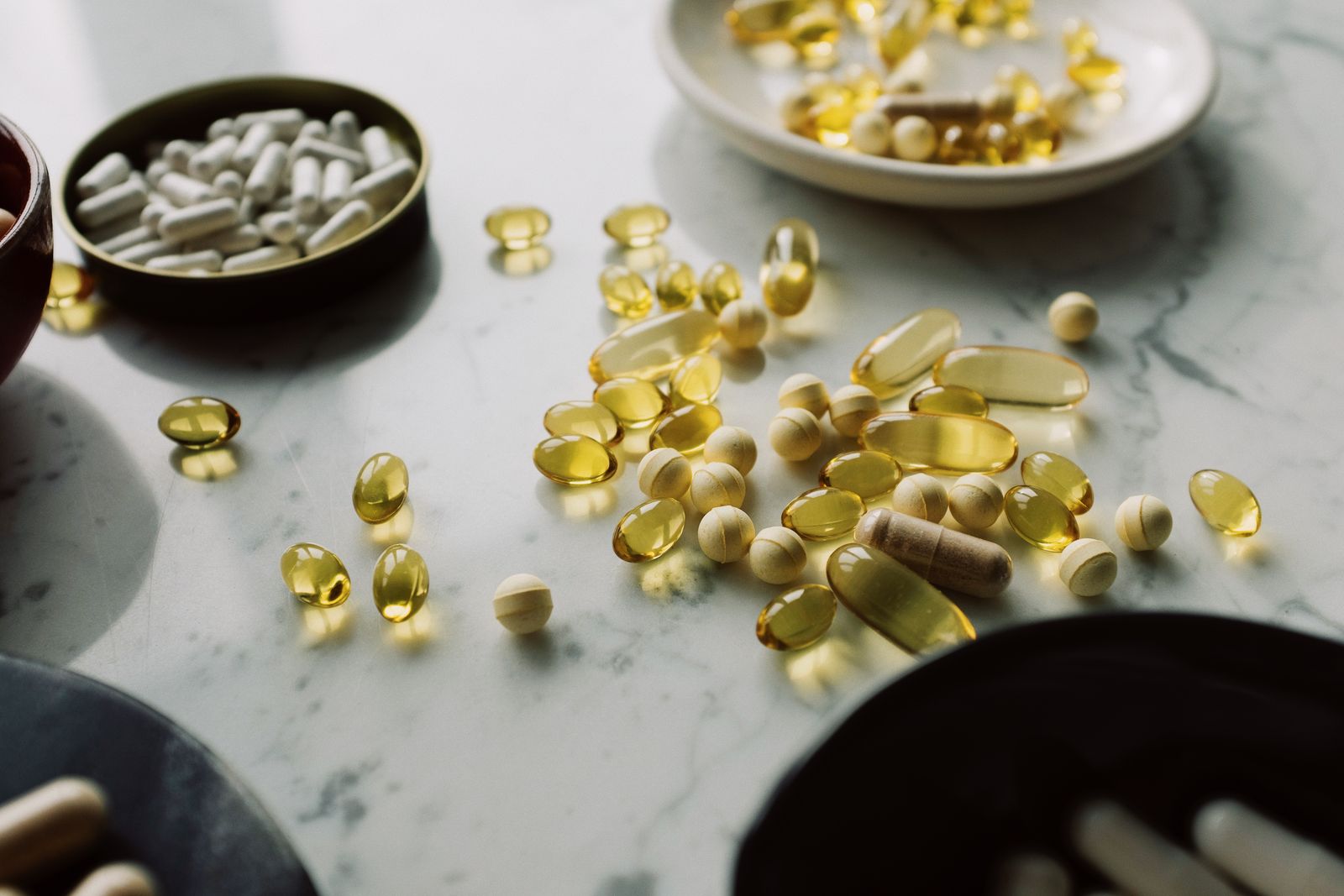
Where nutrients fit
Once diet and sleep are handled, targeted nutrients are the next lever. A few with published research behind them:
- Zinc. A 2020 systematic review and meta-analysis in Dermatologic Therapy found lower serum zinc in acne patients versus controls, and significant improvement in mean inflammatory papule count among those treated with zinc (Yee et al., 2020). Zinc also interacts with androgen pathways in skin, which is part of why it keeps showing up in this specific context.
- Vitamin D. In a 2016 PLOS ONE study, deficiency was found in 48.8% of acne patients versus 22.5% of controls, and a small randomized arm using 1,000 IU daily for eight weeks saw inflammatory lesions fall 34.6% versus 5.8% on placebo (Lim et al., 2016).
- Pantothenic acid. A randomized, double-blind, placebo-controlled trial in Dermatology and Therapy reported a significant reduction in total lesion count at 12 weeks versus placebo (Yang et al., 2014). Small trial, industry-funded, and we'd rather say that than not.
When "naturally" isn't the right goal
Some hormonal acne has a medical driver underneath it. If your breakouts come with irregular cycles, unusual hair growth, hair thinning, or sudden weight changes, ask a doctor about PCOS and get bloodwork. Cystic acne that scars deserves a dermatologist, not a longer supplement stack. Prescription options exist and they work, and choosing one is not a failure of the natural approach.
Diet, sleep, and nutrition make prescription treatments work better anyway. It was never either-or.
Our approach
The DellaPella Clear Skin Supplement is doctor-created and built specifically around internal factors linked to breakouts: vitamin D3, pantothenic acid, zinc, selenium, kiwi extract, and phytoceramides. It's third-party tested for potency and purity, and it's meant to sit alongside the habits above, not replace them.
Plan on 8 to 12 weeks before you judge it. Skin cell turnover and follicle cycles run on their own clock. We include a 90-day money-back guarantee because that timeline is honest, not because it's convenient.
Important: The research cited above examined individual nutrients and dietary patterns, not the DellaPella formula, and study results may not reflect individual outcomes. Dietary supplements are not intended to diagnose, treat, cure, or prevent any disease. These statements have not been evaluated by the Food and Drug Administration. Speak with your doctor or dermatologist before changing your diet or starting a supplement, particularly if you are pregnant, nursing, or taking medication.


